Music is very much part and parcel of our usual Christmas time experience no matter where in the world we are. There are now so many special songs and carols that we are all accustomed to hearing and associating specifically with the season of Christmas.
For each of those songs and carols there is a specific history and therefore story behind both their creation and their content, and I think it will be interesting to research a number of them over the coming year ahead.
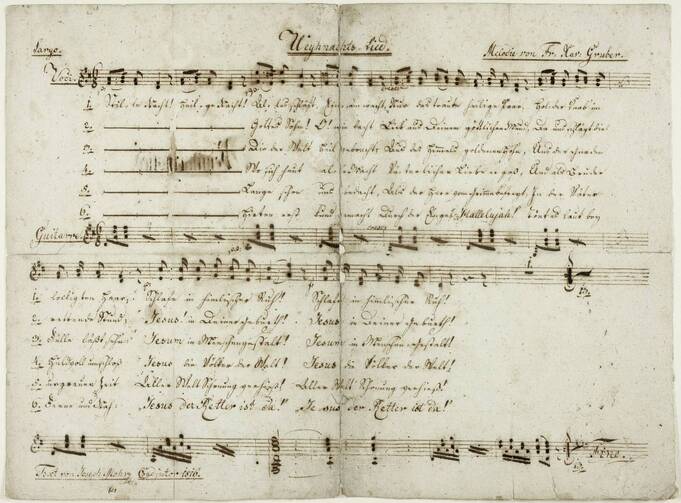
One of the most famous carols and song of the Christmas season of course is Silent Night, Holy Night. I thought I would do some investigating into the origins of this much loved and well known Christmas carol first.
Silent Night, Holy Night where did it originate, what was the purpose of its creation? Who were the people involved in seeing it being written and composed? Where and when was it first sung?

Josephus Franciscus Mohr, an Austrian Roman Catholic priest needed a song for the Christmas Eve midnight mass service in December 1818. He had a poem which he had written several years beforehand and he hoped it could be set to music.
Josephus walked three kilometres from Oberndorf bei Salzburg to a neighbouring town, Arnsdorf bei Laufen, in order to visit a friend who he hoped might be able to help him achieve his goal.
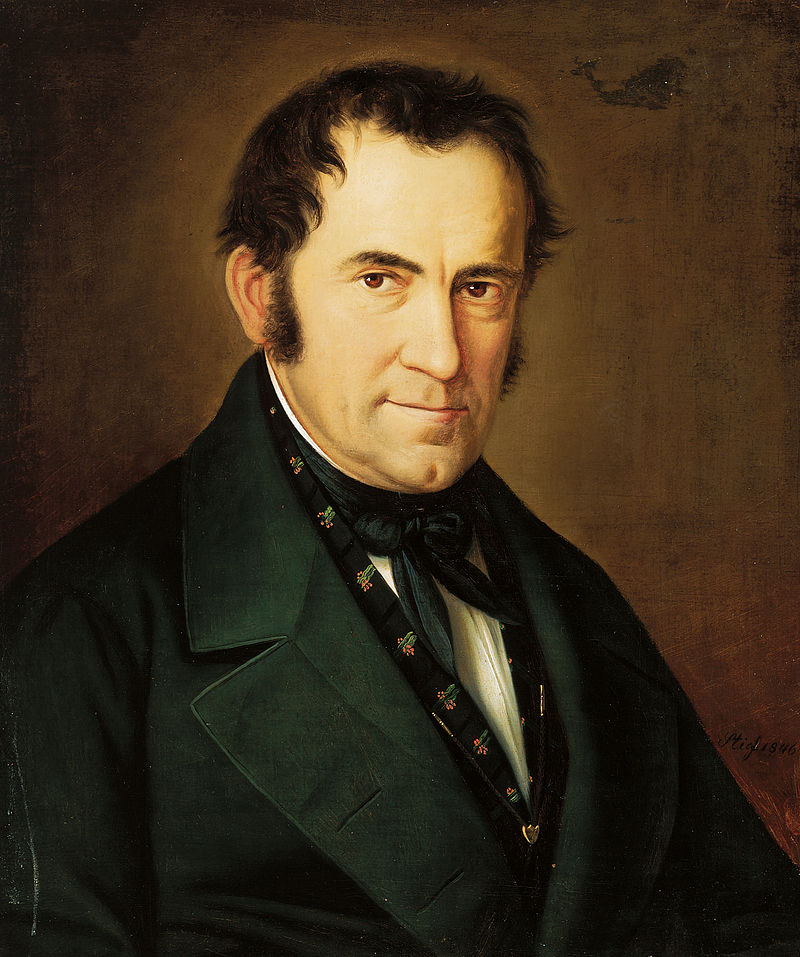
Franz Xaver Gruber, a school teacher who was also a church choir master and organist, within just a few short hours took the poem Josephus had himself written, and the two friends helped sing and present it that very evening whilst Mohr played his guitar.
The song, Stille Nacht, sung that first Christmas Eve at St. Nicholas Church, was a simple arrangement, created for Mohr’s guitar, as well as two voices and an accompanying choir. It is said that Mohr sang the tenor part and played the guitar, while Gruber sang the bass vocals.
In the years that followed, the Rainer and Strasser families who were very musical folk singers that travelled a great deal, made Stille Nacht part of their repertoire. They introduced the song to audiences in Leipzig in 1832, and then in New York in 1839, which all helped to see it shared with a greater number of people. Stille Nacht has now become a Christmas carol that is enjoyed across the whole world.
Interestingly, in 1914 during World War 1, both German and British soldiers on the front line laid down their weapons for a time on Christmas Eve and together sang “Silent Night.” Hearing it be sung by both warring sides had a profound effect on a number of the soldiers that witnessed this occurrence.

In Austria, Stille Nacht is considered a national treasure. Stille Nacht, or as we know it in English, Silent Night, has been translated into over 300 languages.
It has been very interesting finding out about the origins and history of this well known and much enjoyed Christmas carol.
Stille Nacht, heilige Nacht,
Alles schläft; einsam wacht
Nur das traute hochheilige Paar.
Holder Knabe im lockigen Haar,
Schlaf in himmlischer Ruh!
Schlaf in himmlischer Ruh!
Stille Nacht, heilige Nacht,
Hirten erst kundgemacht
Durch der Engel Halleluja,
Tönt es laut von fern und nah:
Christ, der Retter ist da!
Christ, der Retter ist da!
Stille Nacht, heilige Nacht,
Gottes Sohn, o wie lacht
Lieb’ aus deinem göttlichen Mund, Da uns schlägt die rettende Stund’.
Christ, in deiner Geburt!
Christ, in deiner Geburt!
 thechristmasprojectdiary
Leave a comment